Have you every seen Harvey??
If you have, I hope you enjoy it as much as me, and if not, please do. Its a wonderful film, an uplifting comedy.
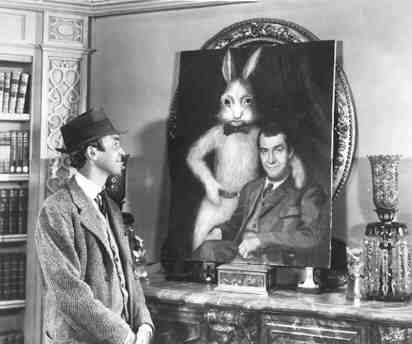
The story is that of Elwood P. Dowd, played by Jimmy Stewart, an eccentric man of means, whose best friend is an invisible 6 foot 3 1/2 inch tall rabbit named Harvey. Harvey is a pooka, a mischievous mythological Celtic creature. Elwood is a cheerfully pleasant gentleman who takes great pleasure in helping those around him. While Elwood's sister tries to commit him to a mental institution, Harvey and Elwood help those around them in one comedic situation after another.
So what's Harvey got to do with leadership? I'm not sure, but I know it has a lot to do with life.
So far my blog has covered
Patience
Listening
Enthusiasm
Accountability
Self-Mastery
Asking of others
Never Settling
Thanking the team
And all that adds up to PLEASANT. No, leadership isn't about being pleasant, sometimes it can end up being downright unpleasant. But that doesn't mean that a leader can't aspire to better things. Having a generally bright, optimistic, and pleasant demeanor makes for better leadership. It gives the team an example to live up to, and it helps push the biggest team killer, fear, off the stage.
It also makes for a better life at work and at home. Pleasant people are approachable people, pleasant people lift the spirits of those around them, and pleasant people can often shed a new light on the most difficult situations. The thing that always strikes me about Harvey is how Elwood and Harvey touch the lives of all they meet, mostly in simple ways, and yet in lasting ways.
Near the end of the movie Elwood gives a very succinct picture of his life philosophy :
"Years ago my mother used to say to me, she'd say, "In this world, Elwood, you must be" -- she always called me Elwood -- "In this world, Elwood, you must be oh so smart or oh so pleasant." Well, for years I was smart. I recommend pleasant. You may quote me."
If only more of us held this view, just think of what we could accomplish!
Saturday, February 12, 2011
Saturday, February 5, 2011
Thank You - the 2 most important words
Taking time to say "Thank You" to your team often and sincerely, is essential to superior leadership. Face it, no man is an island, no man can go it alone in the business world, and therefore your success is dependent upon the successfulness of your team. If you aren't thankful for their efforts, you need to reconsider how you got where you are, and how you can get to where you want to be. A simple Thank You sends multiple messages, it shows your appreciation, it shows your respect, and it shows you care. Your team deserves a periodic pat on the back and woe to the leader who takes his team for granted.
The thank you can be delivered in a variety of ways. Its always best to deliver it quick and in the moment if possible. Anything from a handshake, to the quick handwritten note, can, with a small expression of gratitude, make a significant difference. There's nothing wrong with a quick email, flowers, the favorite snack, or a nice lunch either. The main thing is to make it timely, make it clear, and personalize it.
So, as is so often said, practice makes perfect. Dedicate yourself right here and now, find two people doing a good job each day, and tell them about it. Say "Thanks", it'll make their day, and it makes you feel good too.
People love a grateful leader and are grateful in return.
The thank you can be delivered in a variety of ways. Its always best to deliver it quick and in the moment if possible. Anything from a handshake, to the quick handwritten note, can, with a small expression of gratitude, make a significant difference. There's nothing wrong with a quick email, flowers, the favorite snack, or a nice lunch either. The main thing is to make it timely, make it clear, and personalize it.
So, as is so often said, practice makes perfect. Dedicate yourself right here and now, find two people doing a good job each day, and tell them about it. Say "Thanks", it'll make their day, and it makes you feel good too.
People love a grateful leader and are grateful in return.
Thursday, February 3, 2011
Never Settle
It is not possible to truly succeed as a leader if you are willing to "settle". When you settle, the decision to accept less than what is required, desired, or planned for is made. This is nothing less than deciding to fail, its saying that whatever the goals or targets were, they are not worth my time and energy to work towards.
Establishing your credentials as the leader means showing a willingness to do what it takes to get the job done, not just sometimes, but every time. It also means having the strength to push your team, to hold that same high level of accountability for them as well. This is not as easy as it might appear for as the leader you must take the time draw out the best your team has. It may mean cajoling them when their confidence waivers, pushing them when they want to throw in the towel, and reminding them of their strengths when their hope is flagging. Every good coach knows that players must be held to high expectations and then regularly reminded of their abilities to reach those goals and more.
Have the drive to push for your dreams, and not to settle for less than you deserve. When the team feels this force within you, it will fuel their desire for success.
Remember:
The minute you settle for less than you deserve, you get even less than you settled for.
-Maureen Dowd
Wednesday, February 2, 2011
Ask and ye shall receive
Managers, Supervisors, and Executives who struggle to build effective relationships often have trouble with a specific personality trait, they tend to be "tellers" or "commanders", not "askers". Tellers have a difficult time interacting with people and are ineffective communicators. They regularly demonstrate poor listening skills and deal poorly with feedback.
Becoming the best leader possible requires the ability to be a sincere "asker".
ASK for opinions...People love to feel important, to feel respected, and to feel needed. Seeking their opinion, their wise council, speaks to that need. It also helps to engage the shy or reclusive, and forces the most ardent critics to put up or shut up.
ASK for ideas...This alone opens up worlds of knowledge most vast than your own experiences. Different perspectives leverage the team's abilities and speeds up the improvement process.
ASK questions ... Don't let superficial participation stand unchallenged. Question the team, draw out the reluctant thoughts, press past the surface and get to the root of peoples thoughts and emotions. And show that you don't have all the answers, nor do you want to!
ASK for help... This isn't a sign of weakness, its a sign of trust. Nothing breeds engagement more than showing others that you trust them enough to approach them in a time of need.
And remember that asking for feedback, means that you must listen to what you are being told. It doesn't mean that all advice need be taken, but it does require that you devote your full attention and consideration to the discussion.
Becoming the best leader possible requires the ability to be a sincere "asker".
ASK for opinions...People love to feel important, to feel respected, and to feel needed. Seeking their opinion, their wise council, speaks to that need. It also helps to engage the shy or reclusive, and forces the most ardent critics to put up or shut up.
ASK for ideas...This alone opens up worlds of knowledge most vast than your own experiences. Different perspectives leverage the team's abilities and speeds up the improvement process.
ASK questions ... Don't let superficial participation stand unchallenged. Question the team, draw out the reluctant thoughts, press past the surface and get to the root of peoples thoughts and emotions. And show that you don't have all the answers, nor do you want to!
ASK for help... This isn't a sign of weakness, its a sign of trust. Nothing breeds engagement more than showing others that you trust them enough to approach them in a time of need.
And remember that asking for feedback, means that you must listen to what you are being told. It doesn't mean that all advice need be taken, but it does require that you devote your full attention and consideration to the discussion.
Sunday, January 30, 2011
Self-Mastery
The best leaders are thoroughly comfortable in their own skin. They have developed an understanding and perspective about themselves that allows them to accept each day and all of the challenges that it brings as an opportunity to improve and grow. They have mastered the four "Self's".
Self-awareness
Self-control
Self-management
Self-development
Self-awareness is the ability to clearly and honestly assess your own strengths and weaknesses, drivers, passions, values, and persona or style. Since no person's personality is etched in stone, it is also the willingness to continually reflect upon one's self and to react to what you see. Having this clarity in your life makes it easy to communicate your priorities and perspective to your team.
Self-control is the ability and desire to consistently be the "island of calm" in a stormy world. Patience, empathy, discipline, and respect are the skills that added together project self-control. Remember that this isn't just about verbal communication, but also about controlling your look, mood, and non-verbal cues as well.
Self-management involves constant reflection upon your personal skill set. How effectively you delegate, take initiative, hold yourself and others accountable, goal set, and your general overall wellness. Reflecting on your world view gives you the opportunity to make adjustments and improve day after day.
Self-development is the ability to sustain the three attributes above. Lots of people have done one or more of the selfs, but for true leaders it is an everyday thing. As with most things in life, starting is hard, finishing is harder still, but sustaining it day after day takes dedication.
Leaders who have mastered the self's have a positive aura that people feel almost instantly, call it confidence, charisma, charm, or whatever you like, Self-Mastery allows you to build a team of willing followers.
Self-awareness
Self-control
Self-management
Self-development
Self-awareness is the ability to clearly and honestly assess your own strengths and weaknesses, drivers, passions, values, and persona or style. Since no person's personality is etched in stone, it is also the willingness to continually reflect upon one's self and to react to what you see. Having this clarity in your life makes it easy to communicate your priorities and perspective to your team.
Self-control is the ability and desire to consistently be the "island of calm" in a stormy world. Patience, empathy, discipline, and respect are the skills that added together project self-control. Remember that this isn't just about verbal communication, but also about controlling your look, mood, and non-verbal cues as well.
Self-management involves constant reflection upon your personal skill set. How effectively you delegate, take initiative, hold yourself and others accountable, goal set, and your general overall wellness. Reflecting on your world view gives you the opportunity to make adjustments and improve day after day.
Self-development is the ability to sustain the three attributes above. Lots of people have done one or more of the selfs, but for true leaders it is an everyday thing. As with most things in life, starting is hard, finishing is harder still, but sustaining it day after day takes dedication.
Leaders who have mastered the self's have a positive aura that people feel almost instantly, call it confidence, charisma, charm, or whatever you like, Self-Mastery allows you to build a team of willing followers.
Saturday, January 29, 2011
Accountability for All
Strong leaders gain the trust of their team by being accountable, responsible, and dependable. Being accountable means having the unwavering willingness to accept responsibility for one's actions. However, as a leader you must not only be accountable for yourself but you must be willing to consistently and fairly hold all the team members accountable as well.
Good leadership is demonstrated by refusing to shift blame when problems arise, it means admitting when mistakes are made and taking steps to correct one's short comings. Accountability also means supporting your team when things don't go as planned. Singling out a scapegoat, "throwing a team member under the bus", will utterly destroy any semblance of teamwork and ruin any hope you have of leading effectively. If the group knows you are there for them, they are much more likely to be there for you.
Similarly your subordinates must be held accountable. As the leader you must find effective methods for monitoring the teams status. Having this ability will allow you to monitor their progress from a distance and wisely choose the moments when your input is vital. There must also be a steadfast willingness to hold people uniformly accountable. Playing favorites, or even remotely giving the appearance of having unequal standards for different team members, will also dash a team upon the rocks and kill their chance of success.
In this case it helps greatly to remember a few simple rules.
Don't allow the use of vague, unmeasurable words when discussing action plans. Words and phrases such as "I'll try", "as soon as possible", "I'll do my best", and "by the end of the week" are unacceptable. Lead with details, when reviewing performance and making plans, stick to details, not platitudes. When discussing group actions look for the Who, What, Why, Where, When, and How's. Nobody should ever get off the hook, the plan should always include:
Who's responsible,
What the goal is,
Why its necessary,
Where the activities take place,
And How it will be accomplished - the necessary steps
Its best to remember the great Yoda, "There is no try, do or do not".
It can't be much more straight forward than that.
Friday, January 28, 2011
Enthusiasm is Contagious
Its important to remember that there are many successful leadership styles and not all styles are suitable for all organizations. Military demeanors don't always translate well to the private sector just as not all business leaders would find success as the coach of a basketball or football team. Similarly the leader of a prison gang may not possess skills that would be found in the leader of a non-profit organization.
However, some traits appear to be universally present in the greatest of leaders. Prominent among these is zeal or enthusiasm. No matter how you slice it leaders don't get far without it. It may not always be a positive, bubbly zeal, but call it enthusiasm, drive, or determination, when present in the leader it will spread rapidly through a team. People are naturally attached to the energy that enthusiasm projects. This sense of energy drives people and teams to higher and higher levels of effort and achievement.
Soooooo... just how and in heck do you get it? Most leadership guides will tell you to love what you do and it will come naturally. Of course, that is clearly the easiest and most direct way, but even then no job or task is ever totally infused with things we love. Players may love the games but hate the practices, doctors may love helping people but hate the paperwork, its a part of life that with the good there is also the bad. However, being mindful of some simple concepts can fuel your own enthusiasm and that of your team.
Present a positive outlook. Looking for negatives is easy, critics are easy to find. The leader is the one who knows that success is attainable, and who digs in the hardest when the going is toughest. Help your team look for the "here's how we'll make it happen" rather then making the list of why "it can never happen".
Live and lead with passion. Leaders want to be leaders, whether they know it or not. They get out in front and eagerly push the envelope. Passion is easy to spot but not always easy to achieve, but just by remembering how important it is you can find your way to becoming "passionate about passion".
Above all else, perseverance. No one is perfect, and no leader is either. For all the times things are going great, there will be not so great times as well. Never dwell on the failures, examine them, vow to not repeat them, but don't become engrossed in them. Make yourself and your team push on, people follow the one who refuses to give up!
Technorati --> 7HT4PKRPCPY7
However, some traits appear to be universally present in the greatest of leaders. Prominent among these is zeal or enthusiasm. No matter how you slice it leaders don't get far without it. It may not always be a positive, bubbly zeal, but call it enthusiasm, drive, or determination, when present in the leader it will spread rapidly through a team. People are naturally attached to the energy that enthusiasm projects. This sense of energy drives people and teams to higher and higher levels of effort and achievement.
Soooooo... just how and in heck do you get it? Most leadership guides will tell you to love what you do and it will come naturally. Of course, that is clearly the easiest and most direct way, but even then no job or task is ever totally infused with things we love. Players may love the games but hate the practices, doctors may love helping people but hate the paperwork, its a part of life that with the good there is also the bad. However, being mindful of some simple concepts can fuel your own enthusiasm and that of your team.
Present a positive outlook. Looking for negatives is easy, critics are easy to find. The leader is the one who knows that success is attainable, and who digs in the hardest when the going is toughest. Help your team look for the "here's how we'll make it happen" rather then making the list of why "it can never happen".
Live and lead with passion. Leaders want to be leaders, whether they know it or not. They get out in front and eagerly push the envelope. Passion is easy to spot but not always easy to achieve, but just by remembering how important it is you can find your way to becoming "passionate about passion".
Above all else, perseverance. No one is perfect, and no leader is either. For all the times things are going great, there will be not so great times as well. Never dwell on the failures, examine them, vow to not repeat them, but don't become engrossed in them. Make yourself and your team push on, people follow the one who refuses to give up!
Technorati --> 7HT4PKRPCPY7
Subscribe to:
Posts (Atom)
